
The Body Is The Child’s First Learning System
Before children can focus, communicate, or learn in structured ways, their bodies need to feel organised and secure. Movement, balance, body awareness, and sensory processing form the foundation for attention, emotional regulation, and learning.
When sensory systems are not well organised, children may appear restless, withdrawn, clumsy, easily overwhelmed, or constantly seeking movement.
But these are not simply behaviour problems.
Often, they are signs that the child’s sensory system is still developing and needs support.
At Playstreet, we help parents and professionals understand how sensory development shapes behaviour, learning, and everyday life.
Sensory & Motor Foundations
Speech, attention, and behaviour grow from strong sensory and motor foundations


Through touch, the child begins to feel safe in the world
Sensory processing influences how children:
Pay attention and stay engaged
Feel comfortable in their bodies
Move, balance, and coordinate
Manage emotions and stress
Interact and communicate with others
Participate in everyday activities
Strong sensory-motor foundations help children feel more organised, confident, and ready to learn.
When the body feels regulated, the brain becomes more open to connection, communication, and learning.
Why Sensory Development Matters?


Through movement, the child begins to understand their body
Every child is different, but some children experience difficulties processing sensory information from their bodies or environment.
You may notice things like:
Constant movement, fidgeting/touching, or difficulty sitting still
Sensitivity to sounds, lights, textures, or touch
Avoiding messy play, certain clothes, or grooming activities
Crashing, jumping, or seeking strong movement
Difficulty with balance, coordination, or motor planning
Becoming overwhelmed in busy environments
Difficulty focusing or following instructions
Big emotional reactions during everyday activities
Eating, feeding and sleep difficulties
These behaviours are often signals from the sensory system, not simply behaviour problems.
Understanding the sensory system helps parents respond with support rather than frustration.
Signs Your Child May Be Experiencing Sensory Challenges


Balance and coordination grow through movement and rhythm
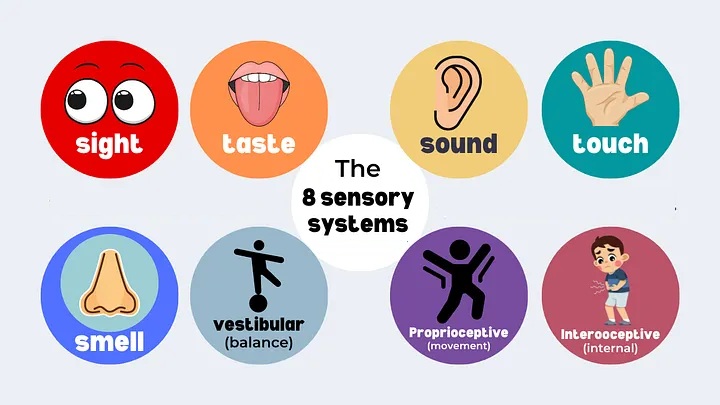
Most people are familiar with the five basic senses:
Sight
Sound
Touch
Taste
Smell
But children actually rely on eight sensory systems that help them understand and interact with the world.
The Hidden Senses That Shape Learning
Vestibular System
Helps with balance, movement, and spatial orientation.
Proprioception
Provides body awareness and helps children know where their body is in space.
Interoception
Helps children sense internal body signals like hunger, thirst, and emotional states.
These sensory systems work together to support:
Body awareness
Emotional regulation
Attention
Motor coordination
Learning readiness
Understanding the 8 Sensory Systems


When these systems are well organised, children feel more calm, confident, and capable and learning becomes possible
At Playstreet, we believe that when parents understand sensory development, they become powerful partners in their child’s growth.
Instead of focusing only on behaviour, we help families look beneath behaviour and understand the sensory and nervous system needs that may be influencing it.
This understanding allows parents to create everyday experiences that support regulation, confidence, and learning.
Our Approach at Playstreet


When parents understand, connection begins to grow
To help parents and professionals build this understanding, we offer a foundational course designed to explain sensory development in a practical and accessible way.
In this course you will learn:
How sensory systems influence behaviour and learning
Why some children seek or avoid certain sensory experiences
How movement and body awareness shape attention and regulation
Practical ways to support sensory development in everyday life
How to recognise your child’s unique sensory profile
This course helps parents move from confusion to clarity when understanding their child.
Learn Through Our Sensory Integration Course
Sense8 – Understanding Sensory Integration
Who This Course Is For
This course is especially helpful for:
Parents of children with sensory sensitivities or sensory-seeking behaviours
Families of children with autism, ADHD, or developmental differences
Parents who want to understand behaviour through a sensory lens
Therapists, educators, and caregivers supporting children
Start Understanding Your Child’s Sensory World
Understanding sensory development can completely change how we see a child’s behaviour.
Instead of asking: “Why is my child behaving this way?”
we begin to ask: “What might my child’s body be trying to tell us?”
That shift can transform how we support children.




Autism - Child and Mother,
A painting by Carmencita Balagtas
What looks different may simply be a different sensory experience
Ready to Learn More About the Course?
Final Thought
Every child’s journey begins with sensation — and grows through connection, movement, and understanding
Safety → Body → Movement → Learning → Connection → Understanding → Joy
When children feel organised in their bodies, they can engage more fully with the world around them.
Understanding sensory development is one of the most powerful ways parents can support their child’s growth.
👉 Explore Sense8 – Understanding Sensory Integration


A regulated child is a connected, thriving child
Let’s take the first step together.
Because when children feel safe, development unfolds.
PlayStreet Global – Online Guidance & Parent Empowerment Platform
Reach out to us
Subscribe to our newsletter
© 2026. All rights reserved.
Mon-Fri 09:00 am to 6:00 pm
Bangalore, India | Empowering families worldwide through online consultations and programs.